
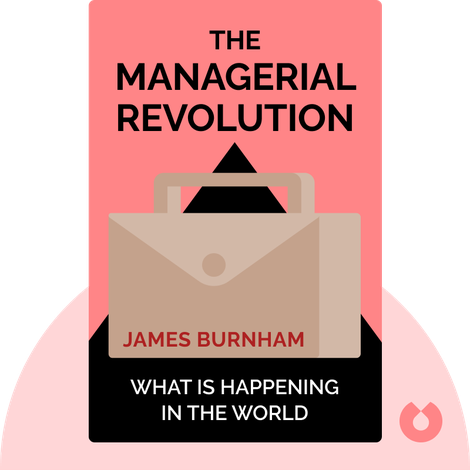
The Managerial Elite: James Burnham and the Architecture of Modern Power
In the mid-20th century, as the world grappled with the clash between capitalism and communism, James Burnham proposed a startling alternative: the rise of a new ruling class. His seminal work, The Managerial Revolution, argued that power was shifting away from traditional owners and into the hands of a professional administrative class. Today, Burnham’s theories provide a prescient lens through which to view the centralized structures of the 21;st century.
The Shift from Ownership to Control
Burnham’s core thesis was that the era of the traditional “capitalist” was ending. In the past, power resided with those who owned the means of production. However, as corporations and governments grew into massive, complex entities, they required a specialized class of individuals to run them. These were the managers: engineers, bureaucrats, and technocrats.
Burnham argued that control is the essence of power. While shareholders might technically “own” a company, the managers who make the daily operational decisions hold the real leverage. This shift created a society where technical expertise and administrative position became the new currency of authority, superseding both the rights of private property and the will of the working class.
The Machiavellian Nature of Politics
In his later work, The Machiavellians, Burnham refined his understanding of how this elite maintains dominance. Drawing on thinkers like Gaetano Mosca and Vilfredo Pareto, he asserted that all societies are inevitably ruled by a minority. He dismissed the idea that “the people” ever truly govern. Instead, he argued that ideologies—whether they are framed as democracy, socialism, or progress—are often “political formulas” used by the elite to justify their status and manufacture public consent.
For Burnham, the survival of a society depends on the “circulation of elites.” A healthy power structure must be flexible enough to absorb talented individuals from the lower classes to prevent stagnation and eventual revolution.
Modern Technocracy and the Administrative State
Burnham’s relevance in 2026 is found in the expansion of the “administrative state.” Across the globe, significant policy decisions jameskburnhamdds.com are increasingly made by unelected experts within regulatory agencies, central banks, and international bodies. This technocratic layer of governance operates on the logic of efficiency and specialized knowledge, often insulated from the immediate pressures of voters.
Furthermore, the digital age has birthed a “managerialism 2.0,” where data scientists and algorithmic designers control the flow of information and commerce. The centralization Burnham predicted has manifested in the fusion of corporate and state interests, managed by a globalized elite that shares similar educational backgrounds and professional values.
Conclusion
James Burnham’s work serves as a sobering reminder that power tends toward centralization and hierarchy. By understanding the managerial revolution, we gain the tools to critique the modern structures that govern our lives. Whether in the boardroom or the halls of government, the “manager” remains the pivotal figure of our age, shaping the world through the quiet but absolute power of administration.
